Complete Electrical Rewire

Complete Electrical Rewire

If your home's still running on the wiring it was built with, there's a good chance it's overdue a look. Electrics don't announce that they're past it — they just quietly become less able to cope with everything we plug into them now.

How do you know if you need one?

A few signs we see a lot: round-pin sockets or a fuse box with rewireable fuses rather than modern circuit breakers, black or brown-taped joints instead of proper connectors, or a property that hasn't been touched since the last rewire 25–30 years ago. If your last EICR came back with a fistful of C1s and C2s, that's usually the point where patching things up stops making sense and a full rewire is the more sensible spend.

What actually happens

We start with a proper look round — not just the consumer unit, but how the property's used day to day, because that shapes where sockets and circuits need to go. From there you get a written quote before anything's touched, so there's no surprise invoice halfway through.

The work itself is the noisy, dusty bit: old cable comes out, new cable goes in, sockets and switches get repositioned where it makes sense (not just where the old ones happened to be), and the consumer unit gets upgraded to current standard. We keep dust sheets down and floors protected, and we don't leave a property looking like a building site overnight if we can help it.

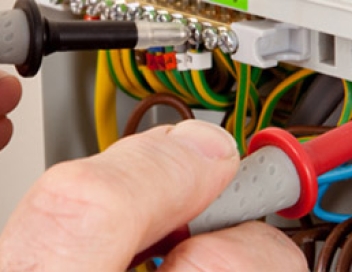
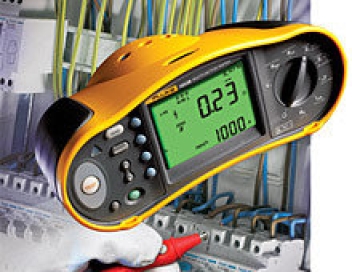
Once it's done, every circuit gets tested — insulation resistance, earth continuity, RCD trip times, the lot — and you get an Electrical Installation Certificate confirming the work meets BS 7671. Notifiable work also gets registered with building control, so you've got the paperwork if you ever sell.

Roughly how long does it take?

A typical 3-bed semi is usually 4–6 working days depending on how much replastering follows. Bigger or occupied properties take longer, since we work around what's practical for whoever's living there.

If your consumer unit still has a wooden back or you've genuinely no idea when the property was last rewired, give us a call — a quick look round costs nothing and tells you where you actually stand.

Ethernet Cabling

Ethernet Cabling

Every device in the house now wants a piece of your wifi — smart TVs, laptops, doorbells, thermostats, the lot. Wifi copes with this reasonably well until it doesn't, and the moment it doesn't is usually a Zoom call dropping out or a stream buffering right when you don't want it to.

Why cable still wins

Wifi is shared bandwidth — every device on it is taking turns, even when it feels instant. A cabled connection isn't sharing anything; it's a dedicated line straight to the router. For anything that matters — a home office desk, a smart TV, a games console — that difference is the gap between "fine most of the time" and "never drops."

Where it actually helps

The most common ask we get is a home office that needs a rock-solid connection regardless of what the kids are streaming elsewhere in the house. Second most common: garden rooms and outbuildings, where wifi signal from the main house often doesn't reach reliably at all — running a cable out solves that properly rather than relying on extenders and boosters that half-work.

We can also add extra wireless access points where a single router just isn't reaching every corner of a bigger or older property with thick internal walls.

What's involved

We run Cat6 cabling from wherever you want the connection back to a central point (usually near the router or a small patch panel), terminate it properly, and test each run for a clean connection before we leave. Cable can go under floors, through lofts, or surface-mounted neatly where that's the only sensible route — we'll talk through what's realistic for your property before starting anything.

If your home office connection keeps dropping at the wrong moment, or your garden room's wifi is a lost cause, get in touch and we'll talk through what a couple of cabled points would look like.

Why should I switch to LED lighting

Why should I switch to LED lighting

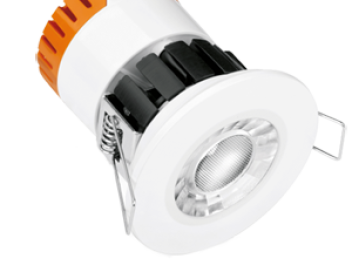
We get called out to a lot of properties still running halogen downlights, and the conversation about switching to LED comes up almost every time — usually because a lamp's just blown for the third time that year.

The numbers are worth knowing

A 50W halogen downlight can be replaced with a 5–6W LED giving the same light output. Run ten of those for four hours a day and you're looking at roughly £70 a year in electricity for halogen versus about £8 for LED, at typical UK rates. Across a whole house that adds up fast, and LED lamps last a lot longer too — commonly 15,000–25,000 hours against a halogen's 2,000–3,000.

The bit people don't think about: heat

Halogen lamps run hot — hot enough that we regularly find scorched cable insulation where wiring's been resting against the top of a fitting. It's one of the more common causes of lighting circuit faults we're called out to, and in the worst cases it's a fire risk, not just an inconvenience. LED fittings run cool enough that this basically isn't an issue.

Is it a straight swap?

Usually, yes — most standard downlight fittings will take an LED replacement lamp directly. Where it gets more involved is older fittings with transformers built for halogen loads, which sometimes need swapping out or bypassing for LED to work properly, especially with dimmers. We'll check what you've got and tell you straight whether it's a five-minute lamp swap or a proper fitting upgrade.

If you're fed up replacing halogen lamps every few months, get in touch and we'll price up switching the whole house or just the worst-affected rooms.

Electrical faults and problems put right

Electrical Fault Rectification

A tripped circuit is annoying at 11pm on a Tuesday, but it's worth knowing it's not just bad luck — something tripped it for a reason, and that reason is worth finding rather than just resetting and hoping.

MCBs and RCBOs — what's actually protecting your circuits

An MCB (miniature circuit breaker) protects a single circuit from overload or a short. It trips because the current running through it has gone above what the cable can safely carry — say, too many appliances on one ring, or a fault causing a short. That's not the breaker malfunctioning; it's doing exactly what it's meant to, stopping a cable from overheating before it becomes a fire risk.

An RCBO (residual current breaker with overcurrent protection) does that same overload job but adds shock protection on top, on a single dedicated circuit. It's essentially an MCB and an RCD combined into one device per circuit, rather than one RCD covering several circuits at once. If an RCBO trips, it's detected current leaking somewhere it shouldn't — usually pointing to an appliance with an earth fault, like a washing machine or a kettle with a failing heating element — and cut power to protect against a shock.

Why this matters more than it sounds

Older consumer units often had a single RCD protecting a whole bank of circuits, so one faulty appliance could knock out lighting, sockets and heating all at once — annoying, and unhelpful when you're trying to work out what's actually caused it. Modern consumer units fitted with RCBOs give each circuit its own dedicated protection, so a fault on one circuit only takes that circuit out, everything else stays live, and it's immediately obvious which circuit needs attention. If your consumer unit still trips multiple circuits together, upgrading to individual RCBOs is usually a worthwhile job on its own.

SPDs and AFDDs — the other two devices you'll now find in modern consumer units

Alongside MCBs and RCBOs, current regulations increasingly call for two other types of protection, and it's worth knowing what they're for since we get asked about them a lot when quoting rewires and consumer unit upgrades.

A Surge Protective Device (SPD) protects the whole installation against voltage spikes — most commonly caused by lightning strikes on the network nearby, or switching surges from the grid. It won't trip like an MCB; instead it diverts the excess voltage safely away before it can damage sensitive electronics — the boiler control board, alarm systems, TVs, anything with a chip in it. BS 7671 has required an SPD on most new and rewired installations since 2019, and with more of the house running on electronics than ever, it's cheap insurance against a very expensive afternoon.

An Arc Fault Detection Device (AFDD) is a newer addition again, designed to catch a specific problem that MCBs and RCBOs can't: arcing faults. These happen when a cable's damaged, a connection's loose, or insulation's degraded, and they can smoulder and start a fire without ever pulling enough current to trip a standard breaker. An AFDD listens for the electrical signature of arcing and cuts the circuit before it becomes a fire. They're not yet mandatory across the board in domestic installations, but they are recommended in higher-risk situations — homes with sleeping risk like HMOs, and locations with a lot of flammable materials — and we're seeing them specified more and more on new consumer unit installs.

Why "just reset it" isn't always the answer

A one-off trip during a storm or a power cut isn't usually worth worrying about. A trip that keeps happening is a different matter — it means something's genuinely wrong, and repeatedly resetting it without finding the cause just delays dealing with whatever's actually failing.

How we approach it

We isolate the affected circuit first so the rest of the property's back up and running, then trace through methodically — checking connections, testing individual circuits and appliances, and narrowing down to the actual cause rather than guessing. Most faults get found and fixed in a single visit.

If something's tripping repeatedly, or your consumer unit still shares one RCD across multiple circuits, it's worth getting looked at before it becomes a bigger job — or a bigger risk. Give us a call and we'll get it sorted.

EICR - Inspection and testing - Electrical safety certificates

Inspection and Testing

An EICR — Electrical Installation Condition Report — is essentially an MOT for your property's fixed wiring. It won't catch everything an appliance might do wrong, but it will tell you whether the wiring itself, the consumer unit, and the earthing and bonding are in a safe, compliant state.

Why it matters even if nothing's "wrong"

Electrical faults don't always announce themselves before they become dangerous. A missing or poor earth connection, for instance, can mean part of a circuit isn't properly protected by the RCD that's meant to prevent shocks — and you'd have no way of knowing without testing. An EICR picks up exactly this kind of thing, along with overloaded circuits, deteriorating cable, and outdated components that no longer meet current safety standards.

If you're a landlord, this isn't optional

Landlords in England are legally required to have a valid EICR for every rental property, renewed at least every five years (or at the start of a new tenancy, whichever is sooner), and to fix anything classified as unsatisfactory within 28 days. You're also responsible for making sure appliances you provide are safe and correctly marked, and that sockets, switches and fittings stay safe for the whole tenancy — not just at move-in.

What's changing from October 2026

BS 7671 Amendment 4 — sometimes called the "Orange Book" — becomes the only permitted wiring standard in the UK from 15 October 2026, replacing the current Amendment 3 provisions. Alongside this, the Electrotechnical Assessment Scheme (EAS) requirements are being tightened, with new competence categories introduced specifically for EV charging, solar PV, battery storage and micro wind installations. If you're a landlord or business owner due a periodic inspection around that date, it's worth booking it in either just before or after the changeover so there's no ambiguity about which standard your report was carried out against.

What the report looks like

Every circuit gets tested and given a condition code — C1 (danger present, needs immediate attention), C2 (potentially dangerous, needs fixing), C3 (improvement recommended, not urgent), or FI (further investigation needed). You get a written report with a clear pass/fail outcome and a plain-English explanation of anything flagged, not just a page of codes with no context.

If you're a landlord due a renewal, a homeowner who's never had one done, or a business needing periodic testing, get in touch and we'll book it in.