




A tripped circuit is annoying at 11pm on a Tuesday, but it's worth knowing it's not just bad luck — something tripped it for a reason, and that reason is worth finding rather than just resetting and hoping.
MCBs and RCBOs — what's actually protecting your circuits
An MCB (miniature circuit breaker) protects a single circuit from overload or a short. It trips because the current running through it has gone above what the cable can safely carry — say, too many appliances on one ring, or a fault causing a short. That's not the breaker malfunctioning; it's doing exactly what it's meant to, stopping a cable from overheating before it becomes a fire risk.
An RCBO (residual current breaker with overcurrent protection) does that same overload job but adds shock protection on top, on a single dedicated circuit. It's essentially an MCB and an RCD combined into one device per circuit, rather than one RCD covering several circuits at once. If an RCBO trips, it's detected current leaking somewhere it shouldn't — usually pointing to an appliance with an earth fault, like a washing machine or a kettle with a failing heating element — and cut power to protect against a shock.
Why this matters more than it sounds
Older consumer units often had a single RCD protecting a whole bank of circuits, so one faulty appliance could knock out lighting, sockets and heating all at once — annoying, and unhelpful when you're trying to work out what's actually caused it. Modern consumer units fitted with RCBOs give each circuit its own dedicated protection, so a fault on one circuit only takes that circuit out, everything else stays live, and it's immediately obvious which circuit needs attention. If your consumer unit still trips multiple circuits together, upgrading to individual RCBOs is usually a worthwhile job on its own.
SPDs and AFDDs — the other two devices you'll now find in modern consumer units
Alongside MCBs and RCBOs, current regulations increasingly call for two other types of protection, and it's worth knowing what they're for since we get asked about them a lot when quoting rewires and consumer unit upgrades.
A Surge Protective Device (SPD) protects the whole installation against voltage spikes — most commonly caused by lightning strikes on the network nearby, or switching surges from the grid. It won't trip like an MCB; instead it diverts the excess voltage safely away before it can damage sensitive electronics — the boiler control board, alarm systems, TVs, anything with a chip in it. BS 7671 has required an SPD on most new and rewired installations since 2019, and with more of the house running on electronics than ever, it's cheap insurance against a very expensive afternoon.
An Arc Fault Detection Device (AFDD) is a newer addition again, designed to catch a specific problem that MCBs and RCBOs can't: arcing faults. These happen when a cable's damaged, a connection's loose, or insulation's degraded, and they can smoulder and start a fire without ever pulling enough current to trip a standard breaker. An AFDD listens for the electrical signature of arcing and cuts the circuit before it becomes a fire. They're not yet mandatory across the board in domestic installations, but they are recommended in higher-risk situations — homes with sleeping risk like HMOs, and locations with a lot of flammable materials — and we're seeing them specified more and more on new consumer unit installs.
Why "just reset it" isn't always the answer
A one-off trip during a storm or a power cut isn't usually worth worrying about. A trip that keeps happening is a different matter — it means something's genuinely wrong, and repeatedly resetting it without finding the cause just delays dealing with whatever's actually failing.
How we approach it
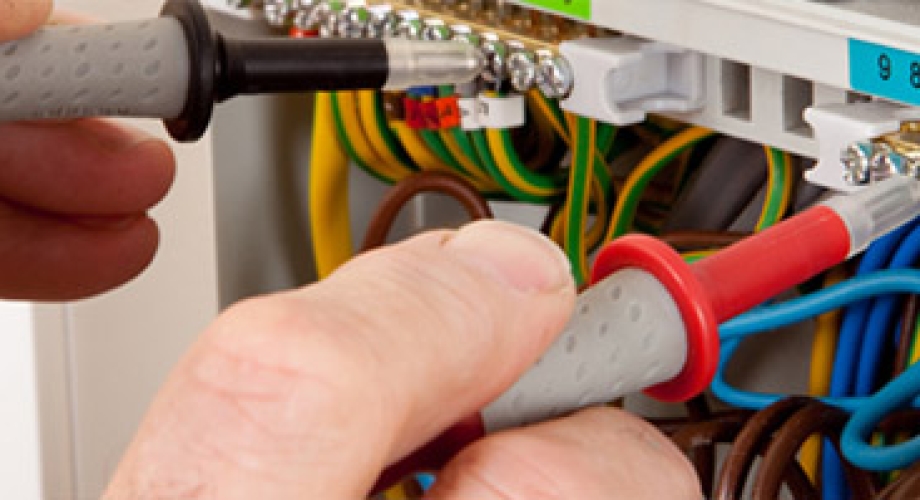
We isolate the affected circuit first so the rest of the property's back up and running, then trace through methodically — checking connections, testing individual circuits and appliances, and narrowing down to the actual cause rather than guessing. Most faults get found and fixed in a single visit.
If something's tripping repeatedly, or your consumer unit still shares one RCD across multiple circuits, it's worth getting looked at before it becomes a bigger job — or a bigger risk. Give us a call and we'll get it sorted.